Warning: Creating default object from empty value in /home2/finalart/plasticcardonline.com/blog/wp-content/themes/salient/nectar/redux-framework/ReduxCore/inc/class.redux_filesystem.php on line 29
Plastic card online
All Posts By

admin

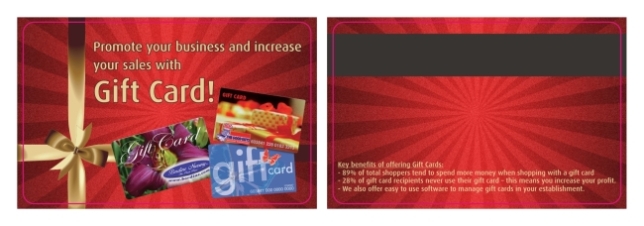
For the person with everything, give the gift of plastic Gift cards

By | News | No Comments

Forget tearing open gifts found under a Christmas tree and leaving shreds of paper and ribbon everywhere. More and more consumers now reach for letter openers to find gift cards.

The National Retail Federation predicts that consumers will buy nearly $25 billion worth of gift cards this year, an increase of about 34 percent from $18.5 billion in 2005.

Once thought of as impersonal, gift cards will show up under more trees this holiday season. These small pieces of plastic have become today’s flexible, safe and “can’t go wrong” gift item.

Some gift-givers and employers prefer giving cards because they are “safe” purchases that seem more personal than handing someone a wad of cash.

Gift for the picky

“I get a gift card for somebody who’s hard to shop for,” said Lesli Baker of Pleasanton. “People get me gift cards because I’m hard to shop for, and I’m picky.”

For retailers, the gift card boom has come with added benefits such as free money when consumers do not use the cards or extra revenues when shoppers spend more than the value of the card.

“People tend to treat themselves when they use a gift card; they buy a luxury item or a non-sale item,” said Chris Donnelly, a partner focusing on retail with Accenture, a consulting firm. “They also tend to spend more than the total value of a gift. In general, if you’re a retailer, those are both good things.”

Extending shopping season

Selling pricier or full-price goods means larger profits for retailers, but it also means an extended holiday season. Most holiday gift cards are used in January, Donnelly said, so retailers have to keep fresh merchandise in stock.

“Smarter retailers are going to take advantage of (the longer holiday season),” he said. “If someone really wants to treat themselves to a cashmere scarf after the holidays, they can probably sell a lot of those at full price.”

A recent survey of American consumers conducted by Accenture found that 72 percent of respondents have given or received gift cards, and about 36 percent prefer receiving gift cards over other gifts.

“If it’s from my mother-in-law, definitely a gift card,” Baker said. “From my niece, I want her to get me gifts. She’s trendy.”

Cards from stores such as Gap, Target and Nordstrom typically are worth their face value and will not lose value over time.

Gift cards issued by credit card companies such as Visa, MasterCard or American Express carry fees and lose value over time.

Sunvalley mall in Concord, for example, sells an American Express card that can be used at the center or any other shopping centers owned by its parent company, the Taubman Centers. The cards have a $2.50 fee when purchased and lose $2 per month if they are not used within 12 months.

Some cards go unused, and the funds return to the retailer or state governments who categorize them as unclaimed property.

The National Retail Federation reports that in 2005, the average gift card was worth $33.42.

Determining the right amount for a gift card can be tricky. Is $10 too little? Is $100 too much?

“The amount I spend depends on how important the person is to me,” said Michael High of Brentwood.

He said he often buys $50 gift cards. Another gift card buyer, Luis Almeyda of Walnut Creek, said his normal target price is $25. Baker said her cards are normally between $25 and $50. Her mom and in-laws are usually on the top end of the range.

Avoiding the guesswork

Almeyda said he started buying gift cards because it takes the guesswork out of finding the perfect item for someone. High agrees.

“I do buy people gifts when I’m in the mood to shop or I know exactly what they want,” High said.

Some retailers, such as Safeway, Longs Drugs and Nob Hill grocery stores, sell gift cards for other retailers on aisle displays near cash registers and on kiosks.

Pleasanton-based Safeway has deals with 200 other retailers ranging from Nordstrom and Sears to Olive Garden and McDonald’s, according to Safeway spokeswoman Teena Massingill.

She declined to provide specific numbers, but she said that sales from Safeway’s “Gift Card Mall” have grown every year since it was started in 2001; Safeway does receive a percentage of the sale.

Buying a gift card during a trip to the grocery store or drugstore makes buying gift cards even easier, shoppers said.

Pick right store, online option

Nordstrom, Target and Macy’s offer a virtual gift card that can be bought and used online, bypassing the need for a piece of plastic. Some cards, such as the ones offered by Starbucks, are used for gifts and as debit cards by regulars.

Choosing the right store for the right person also is important. Some shoppers prefer stores such as Target, Best Buy or Macy’s because they offer wide selections.

Baker, for example, said she would never buy someone a gift card from Wal-Mart because she does not like the merchandise there.

“I think a gift card is a very dull type of gift,” said Susana Scarborough of Oakland. “It shows no imagination. It’s like saying, ‘Well, I have to do this, but I don’t have time.'”
Advantidge Offers New Eco-Friendly ID Cards as Plastic Alternative

By | News | No Comments

Corn Card Ready to Replace Millions of Plastic Cards, Including Photo ID’s, Hotel Key-Cards and Gift Cards

Millions of PVC cards are used every day in a plethora of applications and industries – cutting across nearly every social and business sector imaginable. These include photo IDs for schools and companies, membership cards, hotel room key-cards, and gift and loyalty cards. But since their production is dependent on oil, a non-renewable resource, PVC cards adversely affect the environment, both in their manufacture and eventual disposal.

In contrast, Corn Cards are made from corn, a readily available, renewable resource. Key features include:

* Same familiar look and feel of standard white PVC cards.

* Identical quality and durability of printed cards.

* 100% biodegradable and no toxins released when properly disposed.

* Made from special corn type – not derived from corn used in human food supply.

PVC’s use is rapidly declining, as more and more manufacturers and retailers recognize its harmful environmental effects.

“Biobased plastics such as PLA are a safer and smarter choice for our health and environment than PVC, the poison plastic. PVC is the worst plastic, releasing cancer-causing chemicals that poison our air, foul our water, and contaminate our bodies. We commend companies like Advantidge for moving away from PVC and towards safer alternatives such as PLA. When companies put consumers first, opting to prevent harm where possible, we know that progress is being made,” said Mike Schade, PVC Campaign Coordinator for the Center for Health, Environment & Justice, an environmental health grassroots organizing group based in Falls Church, Virginia.

“When you work with some of the country’s largest retailers, most prestigious educational institutions and all levels of government, they rely on our consultation everyday to meet their unique needs,” said Lawrence Grafstein, CEO, Advantidge. “Corn Cards are a major step forward, easily allowing us to proactively assist our customers in addressing their ‘going green’ initiatives.”

Worthless plastic? Gift cards can become valueless when retailers

By | News | No Comments

NEW YORK — You know that Sharper Image gift card you got for Christmas? Right now, it’s worthless. And other gift cards in your wallet could lose their value, too.

As more retailers file for bankruptcy or go out of business, more than $75 million in gift cards are at risk of becoming worthless pieces of plastic this year.

“If I knew this was going to happen, I would have used them right away,” said Jon Tapper, a public relations executive from Boston who received two Sharper Image cards as business gifts just a few weeks ago. Their total face value is $50.

“I love gift cards, but now this makes me think twice.”

The Sharper Image announced late last month that it was suspending the acceptance of gift cards, at least temporarily. It urged shoppers to check the company Web site later this month for an update. That is typical of businesses that reorganize under Chapter 11 bankruptcy, which treats gift cards as a loan to the company, not as cash.

For many shoppers, it’s a harsh lesson about the risks of gift cards. Consumers spent an estimated $26.3 billion in gift cards at retailers alone last holiday season, compared with $24.8 billion in 2006 and $18.48 billion in 2005, according to the National Retail Federation.

C. Britt Beemer, chairman of America’s Research Group, says, “You will see a lot of frustration among customers. You basically stole (money) out of the customers’ pocket. They will never forgive you.”

The number of retail bankruptcies or liquidations this year is expected to reach the highest levels since the 1991 recession.

Brian Riley, senior analyst at The TowerGroup, estimates that shoppers could lose more than $75 million just from stores and restaurant closings in 2008.

TowerGroup’s figure doesn’t include mom-and-pop services like the local nail salon. Riley said such small operations, which are most vulnerable to economic downturns, pose the biggest risks to gift- card holders.

The gift-card problem provides more ammunition to consumer- advocacy groups that have lashed out against expiration dates and burdensome fees imposed if cards are not used within a certain time frame. More than 20 states have passed regulations loosening restrictions on the use of gift cards.

“Consumers need to buy gift cards with their eyes wide open,” said Jack Gillis, a spokesman for the Consumer Federation of America.

Bankrupt businesses also face the risk that card holders left in the cold could defect to other stores just when struggling merchants need their customers the most.

Even if bankrupt retailers want to honor the gift cards, they may not be able to, according to Howard Kleinberg, director of the bankruptcy practice at Meyer, Suozzi, English & Klein.

Either they can’t afford it, or their creditors’ committee or the bankruptcy court may not allow it. Gift cards amount to debt, and therefore holders are not necessarily going to get paid, Kleinberg said.

Sharper Image officials did not immediately return phone calls, but a customer-service representative told a reporter that shoppers would eventually be able to use the gift cards. She declined to say when.

Gift-card holders fall in the class of unsecured creditors, which is “low in the pecking order,” Kleinberg said. Those at the top of the list are secured creditors — with debts backed by assets such as real estate or accounts receivable.

Of course, if a company is purchased through a Chapter 11 bankruptcy process, the new buyer could honor gift cards.

That appears to be the case with Fortunoff, the jewelry and home furnishings chain that agreed last month to sell to an affiliate of NRDC Equity Partners LLC, which owns Lord & Taylor department stores and plans to expand the Fortunoff chain. A Fortunoff spokeswoman said the company is honoring gift cards.

Riley, of The TowerGroup, estimated that the retailer did about $32 million in business last year from gift cards.

Sharper Image’s rival, Brookstone Inc., based in Merrimack, N.H., is capitalizing on the situation. It announced last week that it would exchange Sharper Image gift cards for 25 percent off any purchase, no matter the amount of the gift card or the cost of the item.

“We thought it would be a great way of acquiring new customers,” said Brookstone spokesman Robert Padgett. “We are here for the long haul, and thought it would be good to let them know.”

Ricki Gard, a manager of the Saks Fifth Avenue’s Premier salon in New York, said it has been able to attract new clients from high- end spa Georgette Klinger, which abruptly closed its locations around the country a week before Christmas, leaving gift card holders in a lurch.

The Saks salon, leased to an outside company, has been offering 30 percent discounts on first-time services for Georgette Klinger gift-card holders, though that was little comfort to many who had thousands of dollars stored on their prepaid cards.

Carol Ann Razza, a Long Beach, N.Y., resident and Georgette Klinger customer for 18 years, lost several hundred dollars when the salon closed its doors.

Plastic Card Personalisation

By | Plastic cards | No Comments

Magnetic Stripe Encoding

the barcode business’s card personalisation systems are able to encode a magnetic stripe. The industry will refer to hico and loco technologies. To simplify these references, a loco magnetic stripe tends to be used in low security applications, e.g. Loyalty, Membership and Retail, etc. The coercivity of this tape tends to be 300; in essence, coercivity relates to the strength of the magnetic field required to write information to the tape, therefore, the lower the coercivity the easier it is to either corrupt or re-write the information to the tape.

Any hico tape can range from 600 coercivity to 4,000, although the most common is 2,750. This tape has now been fully adopted by the banking market and is also used in the majority of access control applications. It should be noted that the higher the coercivity, the more expensive the magnetic tape.

Regardless of the magnetic tape specification, the encoding capacities remain the same. Each ISO card will contain three tracks of information and the specification and capabilities of these is summarised as below.

Smart Card Encoding

the barcode business use systems that are capable of encoding a smart card. The capacities offered by these systems are subject to :

  1. The card personalisation option.
  2. The amount of data to be encoded to the module.

We either inkjet print up to 2 lines of personalisation, thermally print or emboss a smart card. As an average, the Mühlbauer inkjet and chip initialisation systems will yield approximately 3,500 per hour, therefore offering a capacity in excess of 1 million cards per month. Should the thermal printing option be preferred, reduced capacities are available providing a yield of approximately 60,000 cards per month.

Embossing

Embossing is the raised characters found on all credit cards. Whilst it is possible to emboss a card outside of ISO specifications (please see below template), it is recommended that clients conform to those positions summarised below.

You will note that the embossing positions are situated at the bottom of the card. There are two reasons for this, firstly, most plastic cards have a signature panel of some kind which tends to be positioned to the centre of the card on the reverse. If a card was to be embossed within this area, obviously the functionality of the signature panel would be compromised due to the “denting”. Also, it is unlikely for the card to be embossed in the top half due to the likelihood of a magnetic stripe being positioned to the card reverse.

Secondly, should embossed characters be positioned within this area, it would prevent the magnetic stripe from being encoded, or subsequently read. If a card has neither a magnetic stripe nor a signature panel, it is possible with some machines to emboss up to 11 lines to the face of the card. However, the ISO standard is for up to 4 lines of simplex characters and 1 line of OCR characters to be printed. Embossing restricts the customer to only 2 font types.

A maximum of 27 simplex characters can be personalised in 1 line, and a maximum of 19 OCR characters can be printed in one line. It is not possible to print text using the OCR fonts, although the simplex characters can print either numerals or text.

All embossed characters can be tipped in different coloured foils. The most common are gold, silver, black and white, although rare, it is possible to tip the embossed characters in alternative colours.

It is not possible to emboss both sides of the card.

Inkjet Printing

Inkjet printing is a high-speed economical method of card personalisation. All characters are printed in black to the flush surface of a card.

It is possible to inkjet any TT (true type) font in any size font onto the card using the latest video jet and Domino technology. The disadvantage with inkjet printing is that the characters can appear slightly ragged in comparison to those offered by thermal printing. Inkjet systems can yield up to 20,000 cards per hour, therefore, providing a monthly capacity in excess of 8 million. Regardless of the amount of information that is required to be personalised on the card, the machine throughput is constant.

Thermal Printing

Thermal printing offers a high level of quality for flat surface printing. Unlike inkjet printing, the characters are clearly printed and can (using different ribbons) print high quality photographic images. Thermal characters can be printed in colours other than black, including gold, silver, white, blue and red. The disadvantage with thermal printing is that it is slower and more expensive.

It should be noted that card throughput is reduced when additional lines of information are printed.

Zebra Id Card Printers Overview

By | ID Cards | No Comments

If you are looking for a printer that is “made in the USA”, Zebra has the solution for you.  This Illinois based corporation distributes its products in almost 100 countries but keeps its manufacturing base close to home.  The company’s dye sublimation ID card printers are part of a much larger product line including bar coding, labeling and RFID tagging technology.  This widely recognized brand is used by a stunning 90% of the companies featured on the Fortune 500 list and is a rapidly expanding supply chain innovator.

Each Zebra machine can print both monochrome and full color on PVC or composite card stock.  These units can be supplied with 3 track mag stripe encoders and they offer a two year warranty on all equipment.  Some models offer warranty upgrades which include an extended coverage period and a hot-swap program designed to keep your ID enrollment program rolling with minimum downtime in case of component failure.  The entire range of Zebra machines is priced to sell in a tough economic climate so you don’t have to wait for a market upturn to invest in a unit for your office.

P110i and P120i

These 10 pound desk top models can handle entry level and mid volume jobs for corporations, resorts, schools, and many other industries.  The 110i prints single sided cards and the 120i covers the front and back for more design options.  Both models can be equipped with automatic continuous feed hoppers or CardSense one-at-a-time feeders depending on your need to print bulk cards or single units.  Monochrome ribbons are available for purchase in black, blue, and white so you can print on a variety of card stock colors and still have text appear clearly.

Training is quick and easy on these intuitively designed systems and this will save you significant time during the learning process.  User friendly features include the LCD screen (which provides informational prompts), the drop-in ribbon cartridge design, and the blue touch points that let operators know which sections open up for access to the equipment’s interior.  Even printhead replacement is straightforward on the P120i since no tools are required.

P330i and P430i

The 330i is a high speed single sided printer that introduces an angled card hopper design specifically created to reduce mis-feeds.  The 430i dual sided unit also has a reject bin that automatically segregates any cards that failed to encode correctly – allowing you to catch errors before you distribute the final product to customers or employees.  Both of these models can be formatted to incorporate the latest in pass-through encoding options for contact and contactless smart chips.  The built in Ethernet also allows you to connect these printers to your existing computer network without a supplemental device.

Since the 330i and 430i can process a variety of card thicknesses, you have the unique opportunity to print your company business cards on durable 10 mil PVC to create long lasting advertising.  The print head is self aligning for maximum image clarity and Zebra’s dye sublimation ribbons are designed to give you brilliant color.  Making a visual impact with your card printer has never been easier.

The Best Choices for Id Card Printers

By | ID Cards | No Comments

When you are responsible for making ID badges and making sure that they are readable to anyone who needs to see it, you have to make sure that what you purchase is of good quality. You will also need to understand what an ID card printer is and what it can do to help your company.

ID card printers are available for a variety of uses and just like other printers they have more functions than those of printing. Think about the ID cards that you have seen around different businesses. Most of them have a magnetic strip these days that keep information about the employee embedded in it. Part of what the printer does is to encode this information into the magnetic strip on the back.

This magnetic strip must say that the individual is a part of the company and in many cases it keeps the data as to where the individual goes throughout the day. This means that the data must be kept somewhere and generally this is the job of the preinstalled software that comes with the printer.

Any printer you purchase will have a variety of options and functions but you may not need everything that it offers. As an example, some ID cards will not need a magnetic strip. Some of the clubs, temporary programs and conventions may not need this extra strip so you would not need to have this function on your printer. You might only need a single sided printer.

There are a couple of things to consider though when you do decide on a printer. Some ID cards need a double sided printer because they want not only the picture and the name of the individual but you may need other information that won’t fit on the face of the card. In this case your ID card printer would have to print on both sides in order for it to be effective.

The type of printing you need will also determine the printer that you choose. As an example, if you are printing proximity cards, or using smart cards your printer will have more features than someone who only needs an ID card with a picture and the person’s name. Another question is whether you need a hologram on the front of the card as well.

These more advanced ID card printers work on radio frequency in order to give you the information you need for higher security needs. You will need to make sure that this extra encoding is available on the printer you choose.

Another thing to take into consideration is whether you need just one color (monochromatic) or several colors on your card. Some businesses have a certain logo they need put on the card which would lead to a possible custom job — in other words it may be more than your printer can do.

Once you have taken a look at all the printers and you understand your needs, it is a good idea to make sure the printer is user friendly for anyone who is gong to use it.